Dental Implants in Arlington, TX
Replace missing teeth permanently with titanium implants that look, feel, and function like the real thing - backed by 3D imaging and a transparent package price.
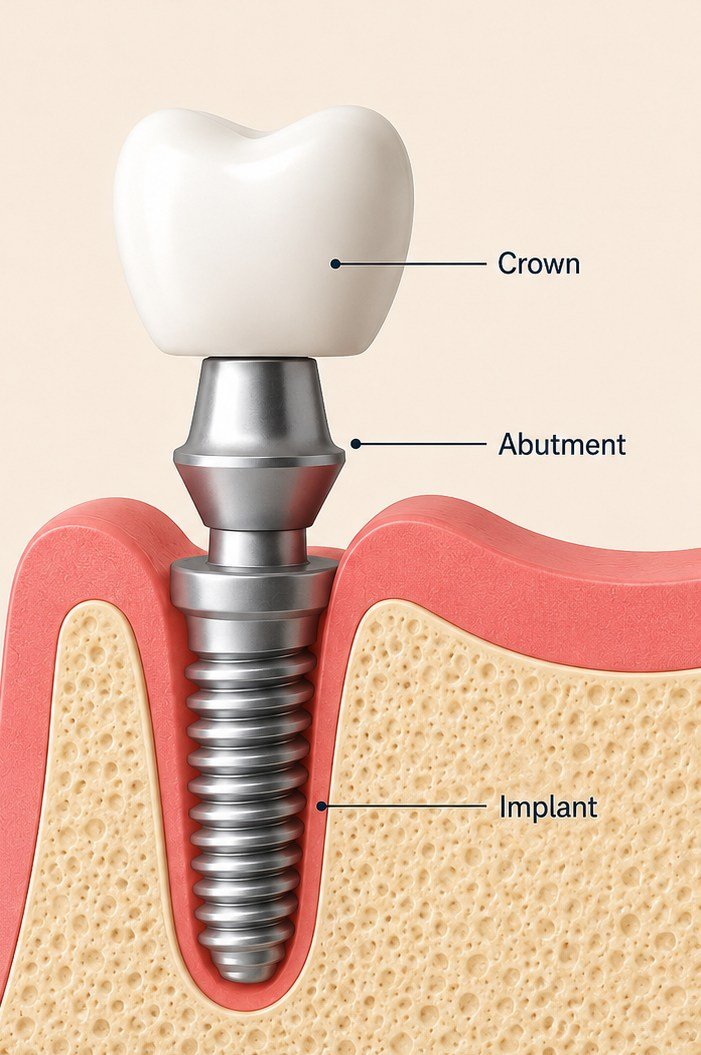
A permanent replacement for the entire tooth - not just the part you see.
A dental implant is a small titanium post that's placed in your jawbone where a tooth root used to be. Over a few months, your bone grows around it (osseointegration), creating a foundation as strong as a natural tooth root. A custom crown is then attached on top.
Unlike a bridge, an implant doesn't require grinding down healthy adjacent teeth. Unlike a denture, it doesn't slip, doesn't restrict what you eat, and doesn't lead to jawbone loss over time.

Why patients choose Dental Implants.
Looks & feels natural
Custom-shaded crowns blend seamlessly with your other teeth - most patients forget which tooth is the implant.
Preserves your jawbone
The titanium post stimulates bone the same way a natural root would, preventing the bone loss that follows extraction.
Built to last decades
With routine hygiene, modern implants commonly last 25+ years - often a lifelong solution.
Eat anything you want
Steak, apples, popcorn - implants restore full chewing power, no food restrictions.
A 4-step process, from scan to smile.
Most of the timeline is passive healing - your active in-chair time is just 3 or 4 short visits across roughly 4 to 6 months.
 01
01Consultation & 3D Imaging
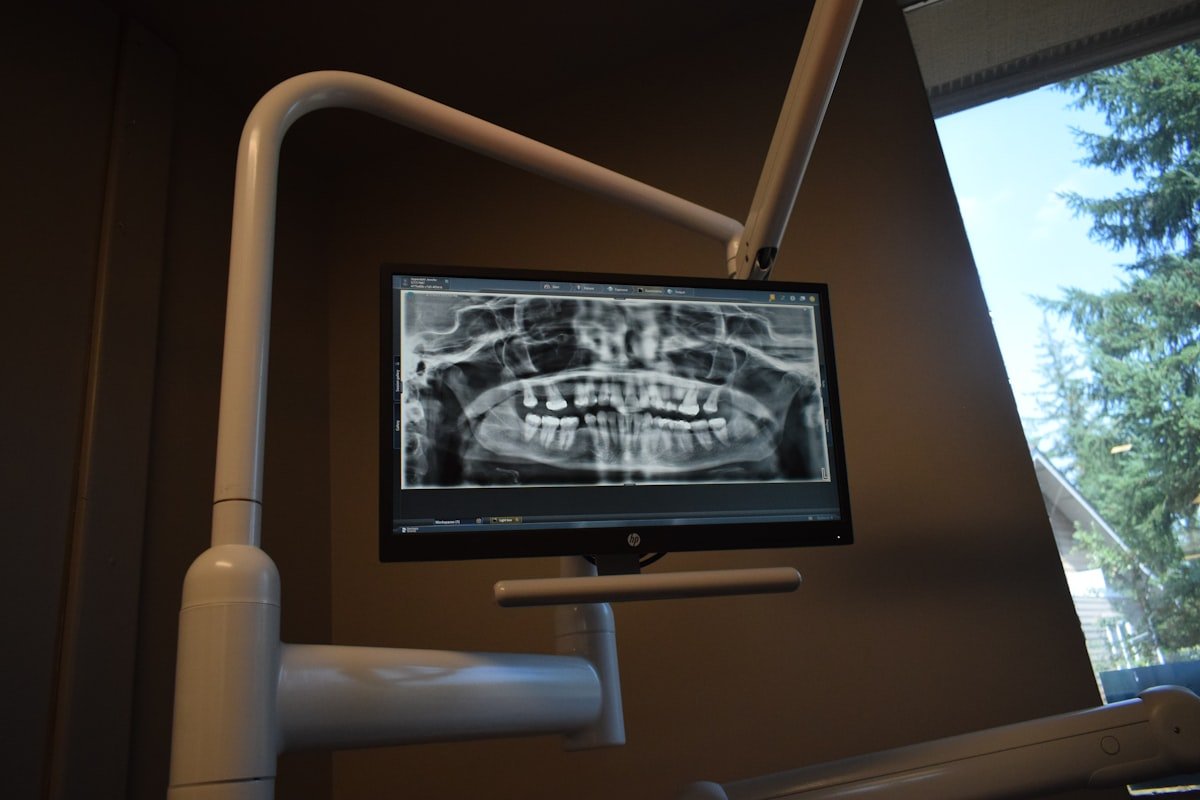
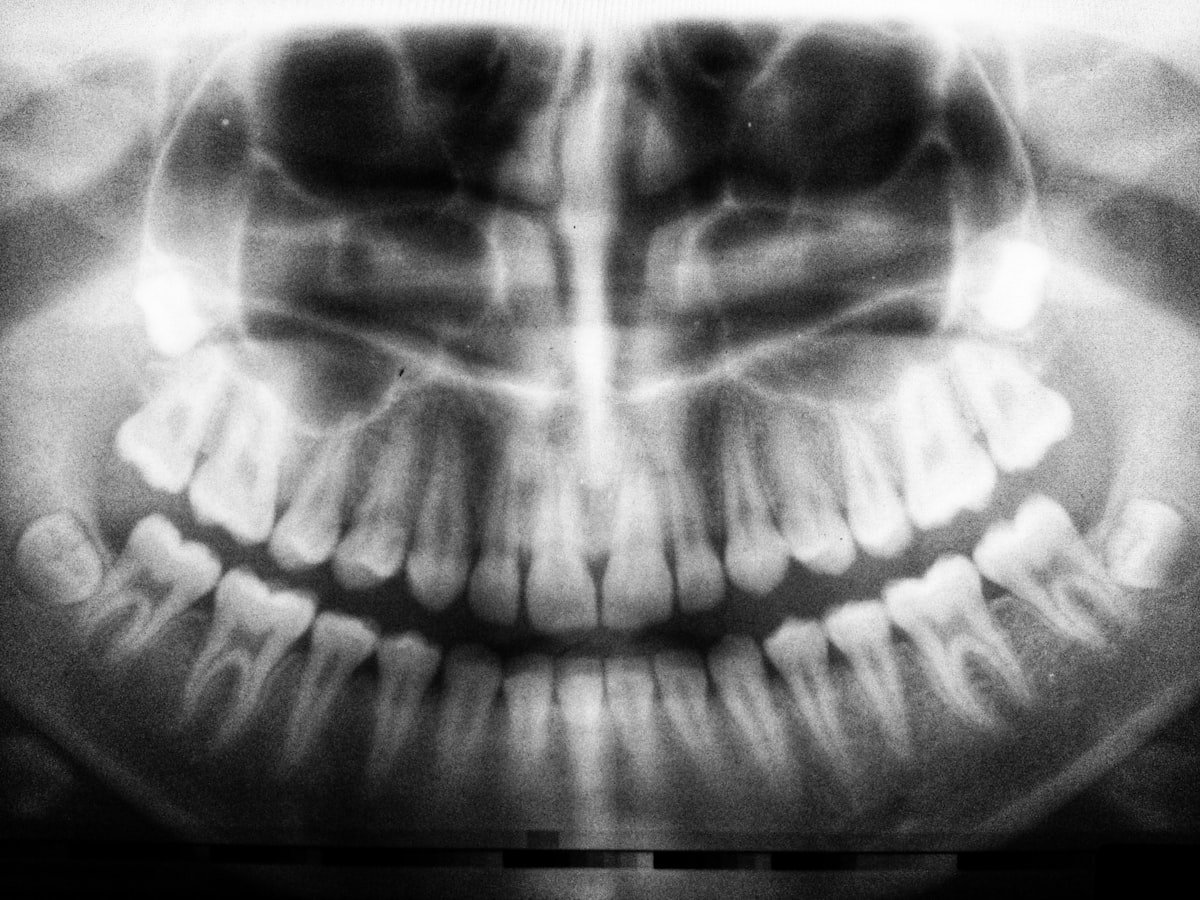
A focused exam plus a low-radiation CBCT 3D scan maps the bone, nerves, and sinuses so your implant is placed exactly where it should be.
 02
02Implant Placement
A small titanium post is gently placed in the jawbone - typically 15 to 30 minutes per implant, with local anesthetic for a comfortable experience.
 03
03Healing & Integration
Over the next 3 to 6 months, the implant fuses naturally with your jawbone (osseointegration) - the foundation that gives implants their lifelong durability.
 04
04Crown Placement
A custom full-zirconia crown is attached to the abutment - color-matched to your smile and shaped for a natural bite.

Most adults are good candidates.
Implants work for almost anyone with a missing or failing tooth. The honest assessment happens during your consultation - but if most of these apply, you're likely a strong candidate:
- You have one or more missing or failing teeth
- You're in good general health
- You have healthy gums (or are willing to treat any gum disease first)
- You have enough jawbone density (or are open to bone grafting)
- You don't smoke (or are willing to quit during healing)
$2,498 complete implant package
CBCT 3D scan + surgical placement + custom abutment + full-zirconia crown. Local anesthetic included. No hidden fees. For uninsured patients - insured patients can call for a benefits-verified quote.
Quality you can verify, in every component.
For patients who want the technical details: here's exactly what goes into your implant and how we plan it.
Grade 4 / Grade 5 Titanium
Medical-grade titanium is the same biocompatible material used in orthopedic hip and knee implants. Surface-treated to accelerate osseointegration and provide a long-term bond with your bone.
Full-Zirconia (Monolithic)
Stronger than porcelain-fused-to-metal, with no metallic line at the gumline. Custom-shaded to your existing teeth and milled to a natural anatomy. Hypoallergenic and stain-resistant.
Cone-Beam CT (CBCT) 3D Scan
Up to 90% less radiation than a medical CT scan, but with full 3D visibility of bone density, nerve canals, and sinus cavities. Gives us the precision to plan your implant placement digitally before any surgery.
Intraoral Optical Scanning
No more goopy putty trays. A handheld optical scanner builds a precise 3D model of your bite in minutes - more comfortable, more accurate, and lets your lab fabricate a better-fitting crown.
Guided, Minimally Invasive Placement
Where indicated, we use a digitally-designed surgical guide for predictable placement at the optimal angle and depth. The result: smaller incisions, less swelling, faster recovery.
FDA-Cleared, Internationally Recognized Brands
We use implant systems with decades of peer-reviewed clinical track record and global parts availability - so any future restoration or service can be performed by any qualified provider, anywhere.
What Are Dental Implants?
Dental implants are permanent tooth replacements designed to restore missing teeth. They provide strong support for crowns, bridges, or dentures while maintaining jawbone health and natural smile aesthetics.
Services Included in Dental Implants
Single Tooth Implants
Replace one missing tooth with a natural-looking crown supported by a titanium implant.
Multiple Tooth Implants
Restore several teeth using implant-supported bridges or partial dentures.
Bone Grafting (if needed)
Prepares the jawbone to support implants for optimal stability.
Full Mouth Rehabilitation
Comprehensive implant solutions for patients missing most or all teeth.
Benefits of Dental Implants
- Restores Function — enables normal chewing, speaking, and biting.
- Preserves Jawbone Health — prevents bone loss that occurs with missing teeth.
- Long-Lasting Solution — durable and reliable for years with proper care.
- Natural-Looking Results — restores smile aesthetics seamlessly.
Why Choose Madison Square Dental for Dental Implants?
At Madison Square Dental, we provide advanced implant solutions with precise planning, high-quality materials, and patient-focused care to ensure long-lasting, natural results.
- Experienced implant specialists
- High-quality, durable materials
- Customized treatment plans
- Focus on comfort, function, and aesthetics
Dental Implant Cost & Insurance
Madison Square Dental is in-network with most major PPO insurance plans. Coverage varies by plan; we verify benefits before treatment and explain estimates clearly. Financing through CareCredit is available for out-of-pocket costs. Call (817) 275-2229 to verify your specific benefits.
Dental Implant FAQs
Are dental implants painful?
Surgery is done under anesthesia for a comfortable experience.
How long does the implant process take?
Typically 3–6 months including healing and restoration placement.
Are implants suitable for all patients?
Most patients are candidates; bone health and oral condition are evaluated.
How long do dental implants last?
With proper care, implants can last decades or even a lifetime.
Schedule a Dental Implant Consultation
Ready to replace missing teeth permanently? Call (817) 275-2229 or request your appointment online.
Serving patients looking for dental implants in Arlington, TX — Madison Square Dental has been trusted by Arlington families for over 40 years.
Many PPO insurance plans provide partial coverage for dental implants. Check our accepted insurance plans or call (817) 275-2229 to verify your benefits before your appointment.
Frequently Asked Questions
How much do dental implants cost in Arlington TX?
Our complete dental implant package starts at $2,498 — that includes the implant post, custom abutment, and zirconia crown. No hidden fees. Financing available through CareCredit and Cherry.
How long do dental implants last?
With proper care, modern dental implants commonly last 25+ years and are often a lifelong solution. The titanium post fuses permanently with your jawbone.
Is the implant procedure painful?
Most patients are surprised by how comfortable the procedure is. Local anesthesia is used throughout, and most describe the sensation as pressure rather than pain. Over-the-counter pain relief is usually sufficient afterward.
Does insurance cover dental implants?
Most PPO dental insurance plans provide partial coverage for implants. We accept Delta Dental, Cigna, Aetna, MetLife, and more. Our team can verify your benefits before treatment.
Dental Implants questions, answered.
Tap a question to expand the answer.
How long do dental implants last?
With good hygiene and routine cleanings, modern implants commonly last 25 years or more - many patients keep them for life. The crown on top may eventually need replacement (typically 10-15 years), but the implant itself fuses to the bone permanently.
Does getting a dental implant hurt?
The placement itself is done with local anesthetic, so most patients feel only mild pressure. Soreness afterward is comparable to a tooth extraction and is usually managed with over-the-counter pain relievers for 2-3 days. Most people return to work the next day.
How much do dental implants cost at Madison Square Dental?
Our complete implant package is $2,498, which includes the CBCT 3D scan, surgical placement, custom abutment, and full-zirconia crown. There are no hidden fees and the price includes local anesthetic. See the full package details →
Will my insurance cover dental implants?
Coverage varies by plan. Most PPO plans cover a portion of the crown and abutment, and some cover part of the surgical placement. We'll verify your benefits and provide a clear estimate before any work begins. Note: our $2,498 package price applies to uninsured patients and cannot be combined with insurance.
How long does the entire implant process take?
From consultation to final crown is typically 4 to 6 months, with most of that time being passive healing as the implant fuses with the bone. Active in-chair time is usually 3 to 4 short visits.
Am I too old for dental implants?
There's no upper age limit. Many of our implant patients are in their 70s and 80s. What matters is your overall health and bone density, not your age.
What if I don't have enough bone for an implant?
Bone grafting is a routine procedure that rebuilds bone volume in areas where it has shrunk. We assess this during your CBCT scan and can perform grafting either before or at the same time as implant placement.
What's the difference between a single implant and an implant-supported denture?
A single implant replaces one tooth with one implant + one crown. An implant-supported denture uses 2-4 implants to anchor a full denture in place - much more stable than a traditional denture but at a lower cost than replacing every tooth individually. We offer both: $4,499 for the lower (2 implants) and $7,999 for the upper (4 implants).
Related Services
Bone Grafting \u00B7 Implant Overdenture \u00B7 Crowns \u00B7 Oral Surgery
Book your visit today.
New patients welcome. Most PPO insurance accepted. Same-day emergency appointments available.