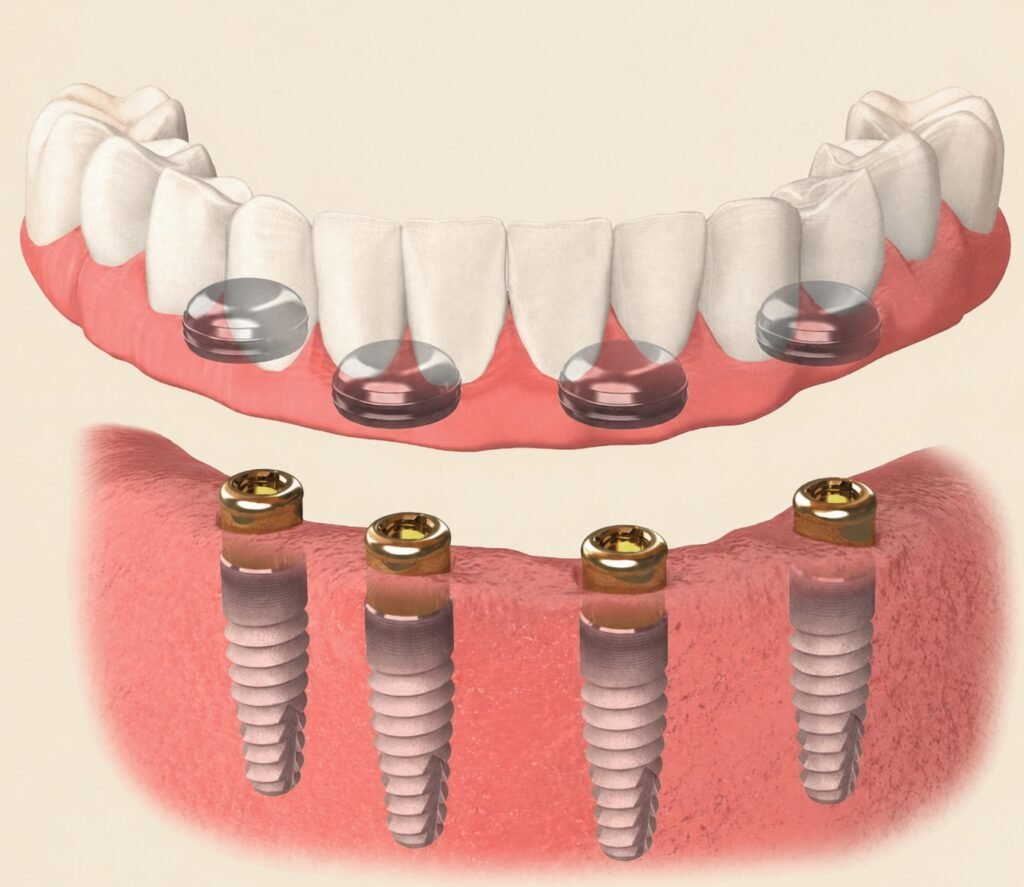
If you’re missing one or more teeth, you’ve probably researched your replacement options — and you’ve probably noticed that dental implants are the most expensive option upfront. That naturally leads to the question: are dental implants really worth the cost?
The short answer is yes — for most patients, dental implants are one of the smartest investments you can make in your oral health. But let’s break down exactly why, compare them to alternatives, and help you decide if they’re right for you.
What Makes Dental Implants Different
Unlike dentures or bridges, dental implants replace the entire tooth — from the root up. Here’s how they work:
- Titanium post: A small, biocompatible screw is placed directly into your jawbone, acting as an artificial tooth root
- Abutment: A connector piece attaches to the post once it has fused with the bone
- Custom crown: A porcelain or zirconia crown is placed on top, custom-matched to your natural teeth
This three-part structure mimics the natural anatomy of a tooth, which is why implants look, feel, and function better than any other replacement option.
The Real Cost of Dental Implants
A single dental implant in Arlington, TX typically costs between $3,000 and $5,500, including the implant post, abutment, and crown. That sounds like a lot — until you compare it to the long-term cost of alternatives.
Implants vs. Bridges: Cost Over Time
A dental bridge costs $2,000–$4,000 upfront but typically lasts 7–15 years before it needs replacement. Over a 30-year period, you could spend $6,000–$12,000+ on bridge replacements. A dental implant, properly cared for, can last a lifetime — making it the more cost-effective choice in the long run.
Bridges also require grinding down the two adjacent healthy teeth to serve as anchors, which weakens them and may lead to additional dental work down the road.
Implants vs. Dentures: Cost Over Time
Removable dentures cost $1,000–$3,000 per arch but need to be relined every 1–2 years and completely replaced every 5–8 years as your jawbone changes shape. Over decades, denture costs add up significantly — and they never stop the bone loss that caused the problem in the first place.
5 Reasons Dental Implants Are Worth Every Dollar
1. They Prevent Bone Loss
This is the single biggest advantage of dental implants — and the one most patients don’t know about until it’s too late.
When you lose a tooth, the jawbone in that area begins to shrink because it no longer receives stimulation from the tooth root. This process, called bone resorption, causes:
- Changes in facial appearance (sunken cheeks, premature aging)
- Shifting of neighboring teeth
- Loosening of adjacent teeth
- Difficulty with denture fit over time
Dental implants are the only tooth replacement option that stimulates the jawbone and prevents this bone loss. Bridges and dentures sit on top of the gum and do nothing to preserve bone.
2. They Last a Lifetime
With proper oral hygiene and regular dental checkups, dental implants can last 25 years to a lifetime. The titanium post integrates permanently with your jawbone through a process called osseointegration. The crown on top may need replacement after 15–20 years due to normal wear, but the implant itself rarely fails.
Compare this to bridges (7–15 years) and dentures (5–8 years), which require periodic replacement and ongoing maintenance costs.
3. They Look and Feel Natural
Modern dental implant crowns are virtually indistinguishable from natural teeth. They are custom-designed to match the shape, size, and color of your surrounding teeth. Unlike dentures, implants:
- Don’t slip or shift when you eat or talk
- Don’t require adhesives or special cleaning solutions
- Don’t cover the roof of your mouth
- Feel like your own teeth
4. They Restore Full Chewing Function
Denture wearers typically recover only about 25–50% of their natural chewing ability. This limits food choices and can affect nutrition, especially for older adults. Dental implants restore nearly 100% of chewing function, allowing you to eat anything — steak, apples, corn on the cob — without worry.
5. They Boost Confidence and Quality of Life
Missing teeth and ill-fitting dentures can cause embarrassment, social anxiety, and reluctance to smile, laugh, or eat in public. Dental implant patients consistently report significant improvements in:
- Self-confidence and self-esteem
- Willingness to smile and socialize
- Comfort eating in restaurants
- Overall quality of life
The psychological and social benefits of dental implants are often just as valuable as the physical ones.
Who Is a Good Candidate for Dental Implants?
Most adults in good general health are candidates for dental implants. Ideal candidates have:
- Adequate jawbone density (or are willing to undergo bone grafting)
- Healthy gums free of periodontal disease
- Good overall health — well-controlled diabetes and other chronic conditions are usually not a barrier
- Non-smokers or willingness to quit during healing
Even if you’ve been told you’re not a candidate in the past, advances in implant technology and bone grafting techniques have made implants possible for more patients than ever. Schedule a consultation to find out if you qualify.
Making Dental Implants Affordable
We understand that the upfront cost of dental implants can be a concern. At Madison Square Dental, we offer several options to make implants accessible:
- Dental insurance: Many plans now cover a portion of implant costs, especially the crown portion. We’ll help you maximize your benefits.
- Flexible financing: Our financing options allow you to spread the cost over monthly payments with low or no interest
- Special offers: Check our specials page for current implant promotions
- Treatment phasing: We can phase your treatment over time to spread costs across insurance plan years
When you consider the long-term value, durability, and quality of life improvements, dental implants are one of the best investments you can make in yourself.
Frequently Asked Questions
How long do dental implants last?
The titanium implant post can last a lifetime with proper care. The crown on top typically lasts 15–20 years before it may need to be replaced due to normal wear. Regular brushing, flossing, and dental checkups are essential for implant longevity.
Are dental implants painful?
Most patients report that implant placement is less painful than they expected. The procedure is performed under local anesthesia, and sedation options are available. Post-procedure discomfort is typically mild and manageable with over-the-counter pain medication for a few days.
Can I get an implant if I’ve had bone loss?
Yes, in many cases. Bone grafting procedures can rebuild the jawbone to provide adequate support for an implant. Your dentist will evaluate your bone density during the consultation and recommend the best approach.
Are dental implants covered by insurance?
Many dental insurance plans now cover a portion of implant costs, particularly the crown component. Coverage varies by plan, so we recommend contacting our office to verify your specific benefits. We also offer financing options for any out-of-pocket costs.
What happens if I don’t replace a missing tooth?
Leaving a gap in your smile can lead to bone loss in the jaw, shifting of adjacent teeth, bite problems, difficulty chewing, and changes in facial appearance over time. The longer you wait, the more complex (and expensive) treatment becomes.
How do I care for my dental implant?
Care for dental implants just like natural teeth: brush twice daily, floss daily (or use a water flosser), and visit your dentist for regular checkups and cleanings. There are no special solutions or adhesives needed.
Find Out If Dental Implants Are Right for You
The best way to determine if dental implants are worth it for your situation is to schedule a consultation with an experienced implant dentist. At Madison Square Dental in Arlington, TX, we’ll evaluate your oral health, discuss your goals, and create a personalized treatment plan — including a clear cost breakdown and financing options.
Schedule Your Implant Consultation
Or call us today at (817) 275-2229 to learn more.
Learn more about Bone Grafting at Madison Square Dental.